Your business is sitting on a mountain of information. Every customer interaction, sale, and operational process generates data, but raw numbers don’t tell you what to do next. This is where a data analytics company comes in—they act as a translator for your data. They don’t just collect and organize it; they find the patterns, predict future trends, and turn that complex information into a clear roadmap for making smarter decisions. A great partner helps you move beyond simply looking at reports and starts building a strategy that uses data to answer your most important questions and drive real, measurable growth for your business.
Key Takeaways
- Start with Your Business Goals: A successful data analytics initiative begins with clear business objectives, not technology. Define what you want to achieve first to ensure every action, tool, and insight is focused on delivering a measurable return on investment.
- Look for a Partner, Not Just a Vendor: The right firm acts as an extension of your team, bringing industry-specific knowledge and a commitment to your long-term success. Evaluate potential partners on their ability to integrate with your culture and empower your team, not just on their technical skills.
- Build on a Foundation of Trust and Security: Your data is one of your most valuable assets, and protecting it is non-negotiable. Prioritize data governance to ensure quality and implement strong security protocols to maintain compliance, protect customer privacy, and build lasting trust.
What is a Data Analytics Company?
Think of a data analytics company as a translator for your business’s data. You have mountains of information coming in every day, but it doesn’t mean much until you can understand what it’s telling you. These companies help you make sense of it all. They go beyond just collecting numbers; they use powerful tools and expertise to find patterns, predict future trends, and turn raw data into a clear roadmap for making smarter decisions. A great partner doesn’t just hand you a report—they help you build a strategy that uses data to move your business forward.
What Services Do They Offer?
A full-service data analytics partner offers a range of solutions designed to help you get real, lasting results from your data. This usually starts with data consulting to figure out what you need and how to get there. From there, they can help with data modernization, which means updating your systems to handle today’s information demands. They also specialize in building predictive models, managing your data platforms, and creating clear data governance rules. The ultimate goal is to create a system where you can trust your data and use it confidently to answer your most important business questions, from understanding customer behavior to streamlining operations.
Why Data Analytics Matters for Your Business
Simply put, data analytics helps you stop guessing and start knowing. It turns raw facts into useful insights that guide your entire business strategy. For example, analytics can reveal how to shape effective pricing models by showing you exactly what customers are willing to pay. It also ensures the information you rely on is accurate and reliable, giving you the confidence to make bold moves. By understanding your data, you can get a complete view of your customers, improve forecasting, and find new opportunities for growth. This isn’t just about numbers; it’s about gaining a competitive edge and building a more efficient, successful business.
Top Data Analytics Companies to Know
The world of data analytics is filled with powerful tools and brilliant minds, but finding the right fit for your business can feel overwhelming. The companies on this list represent a mix of specialized consulting firms, intuitive software platforms, and robust cloud infrastructure providers. Each one brings something unique to the table, whether it’s helping you build a data strategy from the ground up or providing the tools your team needs to uncover critical insights.
Think of this as your starting point for exploring the key players in the industry. Some are household names that have shaped the enterprise technology landscape, while others are modern consultancies focused on delivering customized, high-touch support. As you read through, consider your company’s specific needs: Are you looking for a strategic partner to guide your data journey, a user-friendly tool for your marketing team, or a scalable platform to handle massive datasets? Understanding your goals will help you identify which of these companies might be the right partner to help you turn your data into a real asset.
DAS42
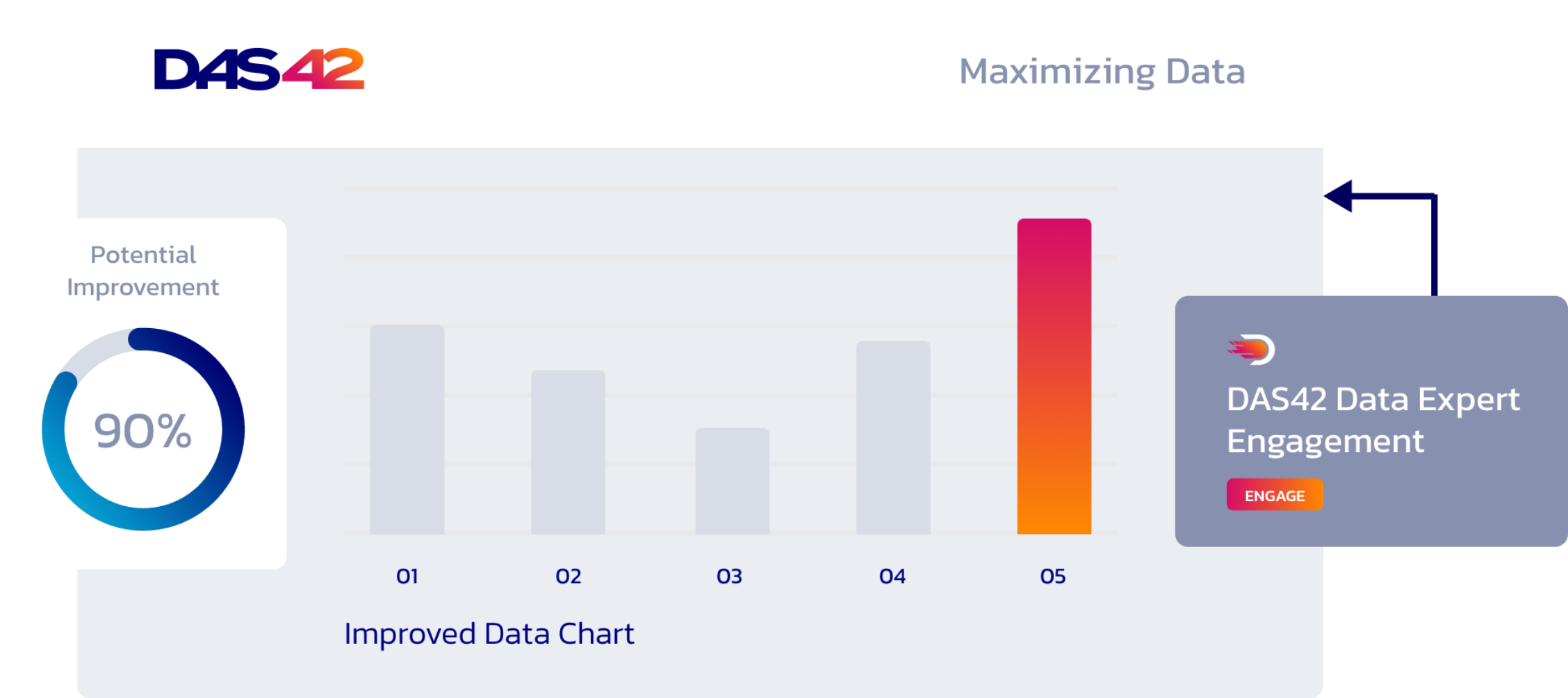
DAS42 is a data analytics consulting firm that acts as a strategic partner for businesses ready to make data a core part of their operations. Instead of just selling software, they focus on developing custom data strategies, building solid data engineering foundations, and creating analytics solutions that fit your specific business needs. They work with companies across various industries to bring clarity to complex data environments. If you’re looking for a team of experts to help you build and execute a data roadmap that drives real results, DAS42 is a great place to start.
Tableau
Tableau is a leader in the world of data visualization, known for its ability to turn complex spreadsheets and databases into beautiful, interactive dashboards. Its platform is designed to be intuitive, allowing people without a technical background to explore data, spot trends, and share their findings with just a few clicks. For organizations that want to empower their teams to make data-informed decisions, Tableau provides the tools to make data accessible and understandable for everyone, from the C-suite to the front lines.
Snowflake
Snowflake has quickly become a central player in the data world with its cloud-based data platform. It’s designed to store, process, and analyze huge amounts of data with incredible speed and flexibility. What makes Snowflake stand out is its unique architecture that separates data storage from computing power, meaning you can scale either one up or down as needed. This makes it a powerful and cost-effective solution for businesses that need to manage growing data volumes and enable seamless data sharing across their organization.
Microsoft
Microsoft offers a powerful and integrated ecosystem of data analytics tools that many businesses already use. With Power BI, teams can create compelling data visualizations and reports to track key metrics. Behind the scenes, Microsoft Azure provides a massive suite of cloud services for data storage, processing, and advanced analytics, including machine learning capabilities. For companies invested in the Microsoft ecosystem, this suite of tools offers a familiar and seamless way to build out their data analytics capabilities from end to end.
IBM
With a long history in technology and innovation, IBM offers a deep portfolio of data analytics solutions designed for the modern enterprise. A key part of their offering is IBM Watson, which uses artificial intelligence to analyze data and uncover insights that might otherwise be missed. IBM’s tools are built to handle complex challenges across many industries, helping businesses tackle everything from supply chain optimization to customer behavior analysis. They provide the advanced capabilities needed to make smarter, more predictive business decisions.
SAS
SAS is a true veteran in the analytics space, respected for its powerful software for advanced analytics, business intelligence, and data management. For decades, organizations have relied on SAS to perform deep statistical analysis and build reliable predictive models. It’s a go-to choice for data scientists and analysts who need a robust, enterprise-grade platform to solve complex problems and drive operational improvements. If your business requires rigorous data analysis and sophisticated modeling, SAS offers a suite of tools that are tested and trusted.
Oracle
Oracle is a major force in the enterprise software world, and its analytics offerings are just as comprehensive. The Oracle Analytics Cloud provides a complete platform with tools for data visualization, reporting, and predictive analytics. It’s designed to help businesses get a holistic view of their operations by connecting data from various sources and turning it into actionable insights. For large organizations, especially those already using Oracle’s databases or other enterprise applications, its analytics solutions offer a powerful and well-integrated option.
SAP
SAP is another enterprise giant that provides end-to-end solutions for businesses, and its analytics capabilities are a core part of that. The SAP Analytics Cloud combines business intelligence, planning, and predictive analytics into one unified platform. This integrated approach helps organizations break down silos between departments and make collaborative, data-driven decisions in real time. For companies running on SAP systems, it provides a seamless way to analyze business performance and plan for the future.
Palantir
Palantir is known for its powerful platforms designed to tackle big data analytics for complex and high-stakes environments. Their software helps organizations integrate massive, disconnected datasets and create a single, unified view of their operations. Palantir is often used by government agencies and large corporations to solve critical challenges, from detecting fraud to managing global supply chains. If your organization deals with incredibly complex data integration problems, Palantir offers a platform built to find signals in the noise.
Alteryx
Alteryx is focused on making data analytics accessible to everyone in an organization, not just data scientists. Its platform provides a user-friendly, workflow-based approach to data preparation, blending, and analysis. With Alteryx, business analysts can easily connect to different data sources, clean and transform the data, and perform sophisticated analyses without writing a single line of code. This self-service model empowers teams to get answers from their data faster, speeding up insights and decision-making across the company.
Key Services a Data Analytics Partner Should Offer
When you partner with a data analytics company, you’re not just buying software; you’re investing in a team of experts dedicated to helping you make sense of your data. The right partner acts as an extension of your own team, providing a suite of services that turn raw numbers into a clear path forward. They bring a mix of technical skill, business acumen, and industry-specific knowledge that’s hard to build in-house, especially for complex fields like media and entertainment or financial services. This partnership is about more than just outsourcing a task; it’s about gaining a strategic advisor who can help you see around corners.
While every company’s needs are different, a top-tier partner should offer a core set of services designed to cover the entire data lifecycle, from initial strategy to ongoing analysis. Think of it as a full-service garage for your data engine. They don’t just change the oil; they help you design, build, and maintain a high-performance machine that powers your entire business. A great firm will help you create a data-driven culture, not just deliver a one-off report. The following key services are the building blocks of a successful data transformation, ensuring your investment in data pays real dividends by making your operations smarter, faster, and more competitive.
Data Strategy and Consulting
Before you can build anything, you need a blueprint. Data strategy and consulting is exactly that: a comprehensive plan for how your business will collect, manage, and use data to achieve its goals. A great partner will sit down with you to understand your unique challenges and objectives. They’ll help you identify the most valuable data sources and create a roadmap for turning those assets into clearer, more confident business decisions. This foundational step ensures that every subsequent action is purposeful and aligned with your company’s vision. It’s about making sure your data works for you, not the other way around.
Platform Implementation
A solid strategy is only as good as the tools you use to execute it. Platform implementation involves setting up the technical infrastructure needed to bring your data strategy to life. This isn’t just about installing software; it’s about architecting a complete data ecosystem. Your partner’s technology teams will build and manage the systems, tools, and security protocols required for robust data analysis. They’ll help you select and integrate the right platforms—from data warehouses to analytics software—ensuring all the pieces work together seamlessly. This technical heavy lifting allows your team to focus on gleaning insights rather than wrestling with complex setups.
Custom Solutions Development
Sometimes, an off-the-shelf solution doesn’t quite fit your specific needs. That’s where custom solutions development comes in. A skilled data analytics partner can create tailored tools, algorithms, and automations designed to solve your unique business problems. This could mean building a custom dashboard that gives your executive team at-a-glance insights or developing a proprietary algorithm to optimize your supply chain. These bespoke solutions are built to integrate perfectly with your existing systems, providing a powerful, specific tool that gives you a competitive edge and drives efficiency where you need it most.
Data Governance
Data is a valuable asset, and like any asset, it needs to be managed and protected. Data governance is the framework of rules, processes, and standards that ensures your data is accurate, consistent, and secure. A good partner will help you establish this framework, defining who can take what action, with what data, and under what circumstances. This process builds trust in your data, so you can be confident that the insights you’re acting on are based on high-quality, reliable information. Strong data governance is essential for regulatory compliance and for making your data a dependable source of business value.
Predictive Analytics
If descriptive analytics tells you what happened, predictive analytics tells you what will likely happen next. This service uses historical data, statistical algorithms, and machine learning techniques to identify the likelihood of future outcomes. A data partner can help you build models to forecast sales, predict customer churn, or anticipate inventory needs. By understanding future trends and behaviors, you can make proactive decisions that prepare your business for what’s ahead. The more quality data you have, the more accurate these predictions become, giving you a powerful tool for strategic planning.
Real-Time Analytics
In a fast-moving market, the ability to make decisions in the moment is a huge advantage. Real-time analytics is the process of collecting and analyzing data as it’s generated, providing immediate insights you can act on instantly. For example, an e-commerce business can use real-time data to adjust pricing based on customer behavior or launch a flash promotion in response to a competitor’s move. A data partner can help you implement the systems needed to process this live data stream, turning your operations from reactive to proactive and helping you capitalize on opportunities as they arise.
Marketing Analytics
Understanding your customers and the effectiveness of your campaigns is crucial for growth. Marketing analytics helps you use data to get a clear picture of your performance and make smarter decisions about where to invest your resources. A data partner can help you track key metrics across all your channels, from social media engagement to email conversion rates. By analyzing customer behavior and campaign results, you can refine your targeting, personalize your messaging, and ultimately improve your return on investment. This service turns your marketing efforts from a guessing game into a data-driven science.
Data Visualization
Raw data can be overwhelming and difficult to interpret. Data visualization transforms complex datasets into intuitive charts, graphs, and dashboards that are easy to understand. A great partner specializes in “data storytelling,” presenting your information in a way that highlights key trends and insights at a glance. This makes it possible for everyone in your organization, not just data experts, to engage with the data and use it to inform their work. Effective visualization turns abstract numbers into a clear, compelling narrative that can guide strategic conversations and decision-making across the company.
Business Intelligence
Business intelligence (BI) brings together all the other services to provide a holistic view of your business operations. It involves using a combination of technologies, applications, and practices to collect, integrate, analyze, and present business information. A data partner can help you build a comprehensive BI system that serves as a single source of truth for your entire organization. This allows your teams to access the information they need to understand performance, identify opportunities, and make smarter, data-backed decisions that drive the business forward.
How to Choose the Right Data Analytics Partner
Selecting a data analytics partner is a major decision. You’re not just hiring a vendor; you’re bringing in a team that will influence your strategy and growth for years to come. The right partner will feel like an extension of your own team, offering the expertise and support you need to turn data into your most valuable asset. To find the best fit, you’ll want to look closely at their technical skills, industry background, technology preferences, support models, and pricing structure. This careful evaluation ensures you find a partner who not only understands your data but also understands your business.
Assess Their Technical Expertise
A top-tier data analytics partner does more than just organize spreadsheets. They should have deep technical expertise in modern data science, including AI and machine learning. These aren’t just buzzwords; they are powerful tools that can help you predict future trends and make proactive decisions. When you’re vetting potential partners, ask them how they apply these advanced techniques to solve real-world business problems. Look for a team that can demonstrate a clear understanding of how to build and implement sophisticated data solutions that drive tangible results, rather than just talking about abstract concepts.
Look for Relevant Industry Experience
Every industry has its own unique data challenges, regulations, and customer behaviors. A partner with experience in your specific field will already understand this context, allowing them to get up to speed faster and deliver more relevant insights. Whether you’re in media and entertainment, e-commerce, or financial services, a partner who speaks your language can help you avoid common pitfalls and identify opportunities your competitors might miss. Check their website for case studies or client lists that show a proven track record of success within your industry. This specialized knowledge is often the difference between a good project and a great one.
Check for Tech Stack Compatibility
Your data partner should be able to work seamlessly with your existing technology infrastructure. A great consultant is often technology-agnostic, meaning they recommend the best tools for the job, not just the ones they happen to sell. During your evaluation, discuss your current tech stack and ask how they would integrate with it. A flexible partner will have experience with a wide range of technology partners, from cloud platforms like Snowflake and AWS to visualization tools like Tableau. This ensures they can build a solution that fits your company’s unique needs and scales with you as you grow.
Review Their Support and Training
A successful data project doesn’t end when the platform goes live. The best partners are committed to your long-term success, which includes providing comprehensive support and training to empower your team. Ask potential partners about their approach to knowledge transfer. Do they offer hands-on training sessions, detailed documentation, or ongoing managed services? The goal is to build your internal capabilities so your team can confidently own and operate your new analytics tools. A partnership should leave your organization stronger and more data-literate than it was before.
Understand Their Pricing and Costs
Finally, it’s essential to have a clear understanding of the financial investment. Data analytics services can vary widely in cost depending on the scope of the project, its complexity, and the partner’s pricing model. Ask for a transparent, detailed proposal that breaks down all associated costs, whether it’s a fixed project fee, a monthly retainer, or a time-and-materials contract. While budget is always a factor, focus on the overall value and potential return on investment. The right partner will be able to clearly articulate how their work will contribute to your bottom line, making the cost a strategic investment in your company’s future.
Prioritize Data Security and Compliance
When you choose a data analytics partner, you’re not just buying a service; you’re entrusting them with one of your most critical assets. That’s why data security and compliance can’t be an afterthought—they need to be at the core of your selection process. A great partner understands that protecting your data is fundamental to earning and keeping your trust, as well as that of your customers. It’s about more than just avoiding hefty fines for non-compliance; it’s about building a sustainable, ethical, and effective data practice.
A robust approach to security and compliance touches every part of your data ecosystem. It starts with ensuring the quality and integrity of the data itself. From there, it involves implementing strict security protocols to control who can access what, and why. It also means staying on top of a complex web of regulations that vary by industry and region. Finally, all of these measures must be balanced with the need for performance, so your systems are not only secure but also fast and efficient. Your data partner should be your guide and expert in all these areas, helping you build a data foundation that is both powerful and protected.
Manage Data Quality
The old saying “garbage in, garbage out” is the unofficial motto of data analytics. The most sophisticated algorithms and beautiful dashboards are useless if they’re built on inaccurate, incomplete, or inconsistent data. A top-tier data partner prioritizes data quality from day one. They help you establish clear data governance practices to clean, validate, and maintain your data over time. For example, if you want to use analytics to optimize your pricing, you need reliable data on customer behavior and market trends. Without high-quality data, any pricing model you build will be based on flawed assumptions, leading to poor business decisions.
Implement Strong Security Protocols
Protecting your data from unauthorized access and potential breaches is non-negotiable. Your data analytics partner should have a proven track record of implementing strong security measures. This includes everything from data encryption to role-based access controls. Different teams within your organization need different levels of access; your executive team needs a high-level overview, while your operations staff needs granular data. A skilled partner can help you design a system that provides the right information to the right people while keeping sensitive data secure. This protects both your proprietary business information and your customers’ private data.
Adhere to Regulatory Compliance
The landscape of data privacy regulations like GDPR and CCPA is constantly changing, and the consequences of non-compliance can be severe. A knowledgeable partner will have deep expertise across different industries and their specific regulatory requirements. They can help you build a data infrastructure that is compliant by design, ensuring that your methods for collecting, storing, and processing data meet all legal standards. This isn’t just about checking a legal box; it’s about demonstrating your commitment to handling customer data ethically and responsibly, which is a cornerstone of modern customer relationships.
Optimize for Performance
A secure and compliant data platform is essential, but it also needs to be fast and responsive. If your team has to wait minutes—or hours—for a query to run, their ability to make timely, data-driven decisions is severely hampered. An expert data partner will architect your analytics platform for optimal performance. They’ll help you select the right technology partners and configure your systems to handle your specific data volume and complexity. This ensures your team can access the insights they need, when they need them, making your entire data analytics investment more effective and valuable.
What’s Next in Data Analytics?
The world of data analytics is constantly evolving, driven by new technologies and shifting business needs. Staying ahead means understanding where the industry is headed. The most impactful trends aren’t just about flashy new tools; they’re about making data more accessible, actionable, and secure. From integrating artificial intelligence to prioritizing customer privacy, these shifts are redefining what it means to be a data-driven organization. Keeping an eye on these developments will help you build a strategy that’s not just effective today, but ready for tomorrow.
AI and Machine Learning Integration
Artificial intelligence and machine learning have moved from the realm of theory to practical application. Today, leading companies use these technologies to go beyond simply analyzing what happened in the past. They’re building models that can predict future trends, identify opportunities, and solve complex problems with incredible speed and accuracy. Integrating predictive analytics into your operations allows you to anticipate customer needs and make proactive decisions. This shift from reactive to forward-looking analysis is a game-changer, turning your data from a historical record into a strategic guide for the future.
Cloud Analytics Platforms
The days of being tied to on-premise servers are fading fast. Modern data analytics lives in the cloud, and for good reason. Cloud platforms offer unparalleled scalability, flexibility, and security, allowing you to adapt your data infrastructure as your business grows. A well-defined cloud strategy ensures your team can access the data they need from anywhere, without the massive overhead of maintaining physical hardware. This approach not only makes your data systems more resilient but also fosters collaboration and innovation by breaking down information silos and providing a single source of truth for your entire organization.
Automated Analytics Solutions
Automation is making sophisticated data analysis more accessible than ever. By using smart tools to handle routine data preparation and reporting tasks, you can free up your analytics team to focus on what they do best: uncovering strategic insights. Automated solutions can quickly process vast amounts of information, identify patterns, and generate reports, enabling faster and more consistent decision-making across your business. This efficiency means you can get critical insights into the hands of stakeholders right when they need them, helping your company operate with greater agility and precision.
Privacy-First Analytics
In an age of increasing data regulation and consumer awareness, privacy is not just a compliance checkbox—it’s a cornerstone of customer trust. A privacy-first approach to analytics means embedding data protection principles into every stage of your data lifecycle. This involves more than just adhering to rules like GDPR; it’s about building a culture of responsible data handling. Strong data governance ensures you can derive valuable insights while respecting customer privacy, which strengthens your brand reputation and creates more meaningful, trust-based relationships with your audience.
Real-Time Processing Capabilities
Business doesn’t wait for yesterday’s reports. The ability to process and analyze data in real time is becoming a critical competitive advantage across many industries. Real-time analytics allows you to monitor operations, track customer behavior, and respond to market changes as they happen. Whether it’s personalizing a customer’s website experience on the fly or detecting fraudulent activity in milliseconds, immediate insights enable you to make smarter, in-the-moment decisions. This capability transforms your data from a static resource into a dynamic tool that helps you connect with customers and optimize performance continuously.
How to Build Your Data Analytics Strategy
A solid data analytics strategy is your roadmap to making smarter, data-informed decisions. It’s not just about collecting data; it’s about using it to answer your most important business questions. Without a clear plan, you risk investing in tools and talent without seeing a real return. Building a strategy ensures that every data initiative is directly tied to a business outcome, turning your data from a simple resource into a strategic asset. It aligns your teams, clarifies your goals, and provides a framework for measuring success. Let’s walk through the steps to create a strategy that works for your organization.
Define Your Business Objectives
Before you dive into data, start with your business goals. What are you trying to achieve? Are you looking to increase customer retention, streamline operations, or enter a new market? Your objectives will guide your entire strategy. For example, if your goal is to refine your pricing, your data analytics should focus on customer behavior, market trends, and competitor strategies. As one expert notes, “Price optimization involves analyzing customer and market data to identify the ideal price point for a product or service.” Clearly defining these goals ensures your data strategy is built to solve real-world problems, not just to analyze data for its own sake.
Assess Your Current Capabilities
Once you know what you want to achieve, take stock of where you are now. What data do you currently have? What tools are you using? And what skills does your team possess? This assessment will highlight any gaps between your current state and your future goals. It’s also the time to think about your budget. Understanding how much data analytics services cost is essential for planning. The investment can vary widely based on your needs, so getting a clear picture of your resources and limitations early on will help you make realistic plans and allocate your budget effectively.
Create a Clear Implementation Plan
With your objectives and current capabilities in mind, it’s time to map out the “how.” Your implementation plan should detail the specific steps you’ll take to reach your goals. This includes selecting the right technology, setting a realistic timeline, and defining roles and responsibilities for your team. The cost of your project will depend on factors like the amount and quality of your data, the complexity of the project, and the level of expertise required. A detailed plan helps you manage these variables and keeps everyone aligned. A good plan acts as your guide, ensuring a smooth transition from strategy to execution.
Measure Your ROI and Success
How will you know if your strategy is working? The final step is to define your key performance indicators (KPIs) and establish a system for tracking them. These metrics should tie directly back to the business objectives you set in the first step. Figuring out the cost of data analytics is complex, but a thorough cost-benefit analysis can help you understand the financial implications and benefits of your initiatives. Regularly reviewing your progress against your KPIs allows you to demonstrate the value of your data analytics efforts and make adjustments to your strategy as needed. This continuous feedback loop is what drives long-term success.
Related Articles
- Detect & Resolve Threats Faster with Analytics-Enhanced Cybersecurity
- How data analytics can improve customer experience and retention
- Data Governance as a Service: The Ultimate Guide
Frequently Asked Questions
What’s the real difference between hiring a consulting firm versus just buying analytics software? Think of it this way: buying software is like buying a set of professional-grade kitchen knives, while hiring a consulting firm is like hiring a chef to design your menu and teach you how to cook. The software provides the tools, but a partner like DAS42 provides the strategy, expertise, and hands-on help to turn those tools into real business results. They help you figure out what questions to ask, build the right systems, and ensure your team knows how to use the data effectively long after the initial project is done.
My business doesn’t have a dedicated data team. Can we still benefit from working with a data analytics partner? Absolutely. In fact, that’s one of the best reasons to bring in a partner. A good data analytics firm acts as an extension of your team, providing the specialized skills you may not have in-house. They handle the technical heavy lifting—from building your data platform to developing predictive models—so your team can stay focused on running the business. The goal is to give you access to expert-level insights without the cost and time of building a data department from scratch.
How do I know if my company’s data is ready for a big analytics project? It’s a common concern, but you don’t need perfect data to get started. A great first step with any data partner is a discovery phase where they assess the quality and completeness of your current data. They can help you identify what’s usable now and create a plan to clean up and organize the rest. The most important thing is to have clear business goals. If you know what you want to achieve, a good partner can help you figure out how to get your data into shape to make it happen.
What does a typical engagement with a data analytics partner look like? It usually begins with a deep dive into your business objectives to create a clear strategy and roadmap. From there, the process moves into the technical phase of implementing platforms and building the necessary infrastructure. This is a collaborative effort where the partner works closely with your stakeholders to ensure the solutions fit your needs. The engagement often concludes with training and support to empower your team to use the new tools confidently, ensuring the value of the project continues long-term.
How do we measure the success of a data analytics investment? Success is measured against the business goals you set at the very beginning. If your objective was to improve customer retention, you’d track churn rates before and after implementing your new analytics solution. If you wanted to streamline operations, you’d measure efficiency gains or cost reductions. A good partner will help you define these key performance indicators (KPIs) upfront and build dashboards to track them, making it easy to see the direct impact of your investment on the bottom line.



Services provided